Demonstrator of industrial-scale maritime decarbonization.
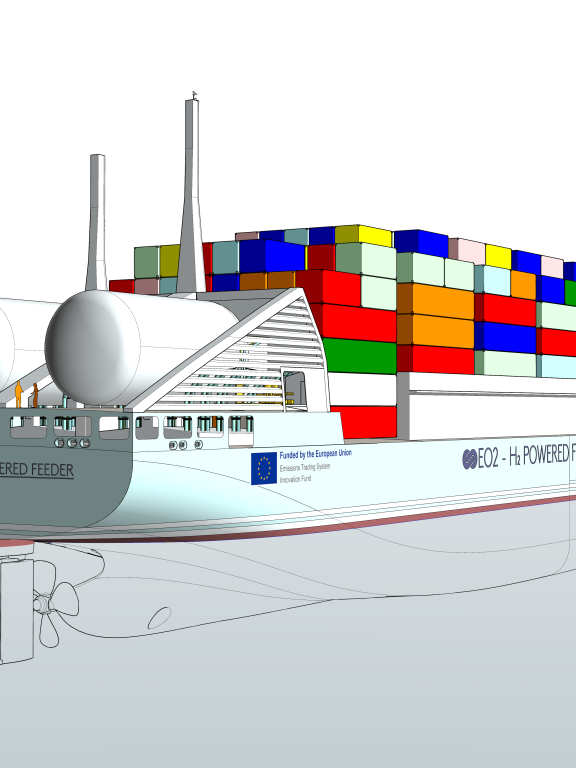
EO2 is a liquid hydrogen-powered pilot freighter designed to operate on European commercial routes. A true industrial demonstrator, it avoids 98% of emissions during operations and combines autonomy, power, silence, and performance to accelerate maritime decarbonization.
From a round-the-world first to an industrial demonstrator
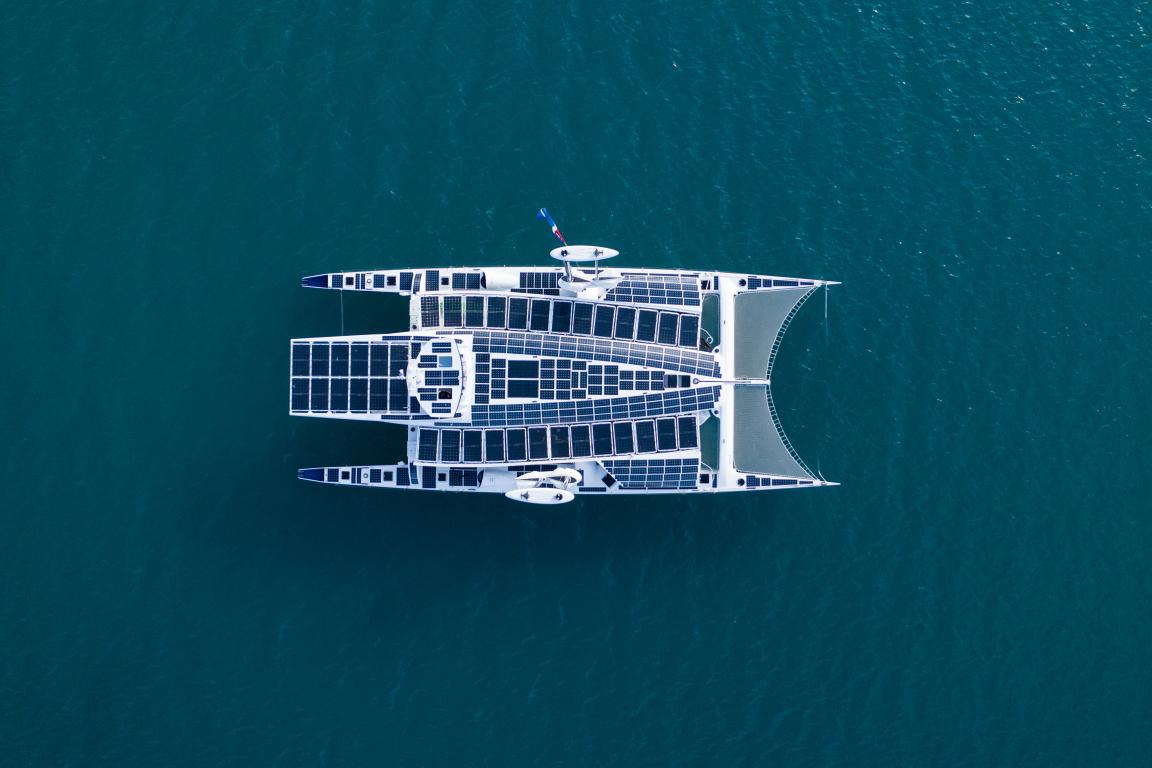
EO2 is the direct successor to EO1, the world's first floating laboratory to have completed a round-the-world journey using a mix of renewable energy and hydrogen produced on board. This pioneering adventure enabled real-world testing of complex energy architectures, shed light on their limitations, and, above all, demonstrated their viability.
Five systems that make zero-emission freight possible
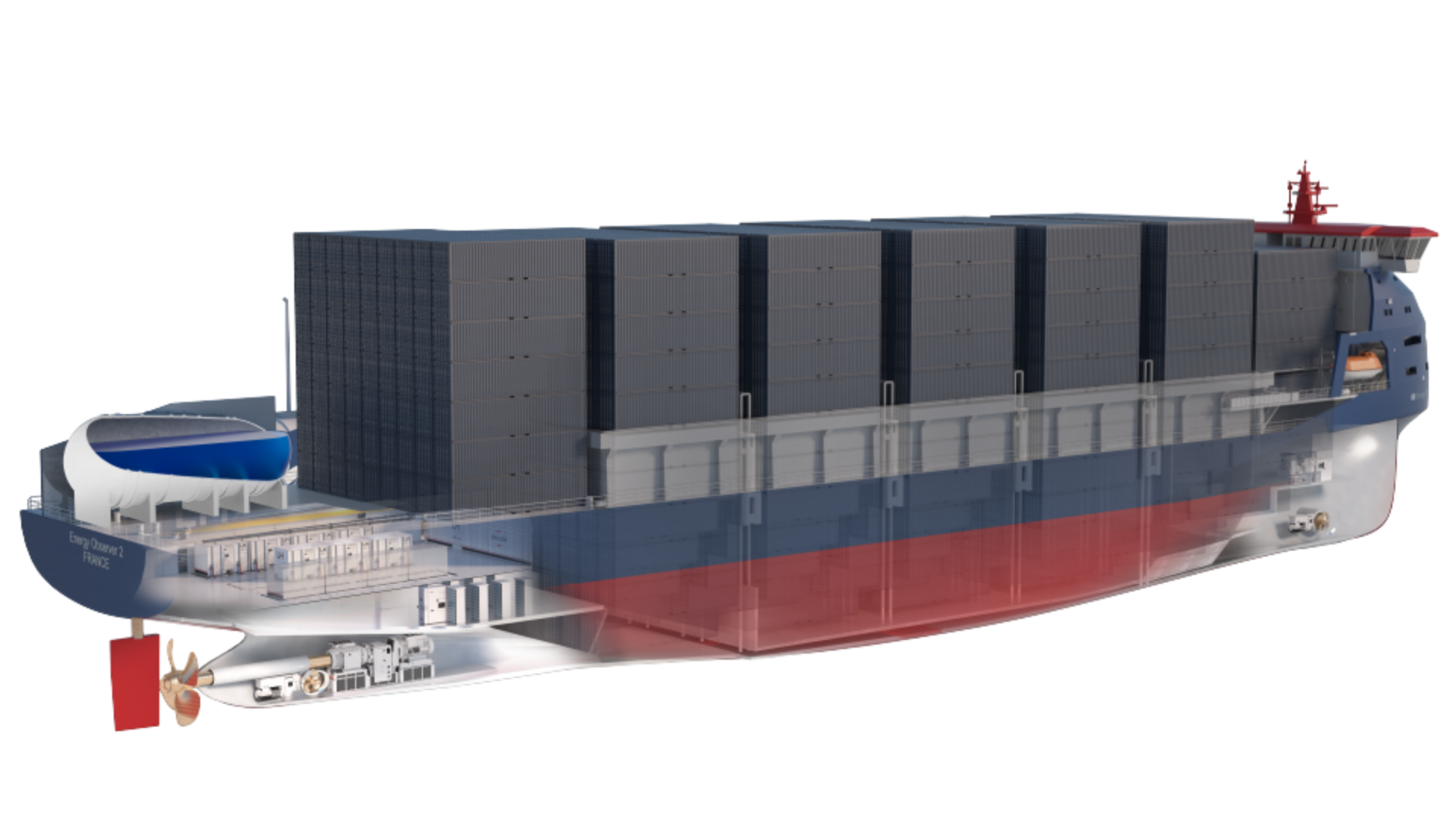
Propulsion
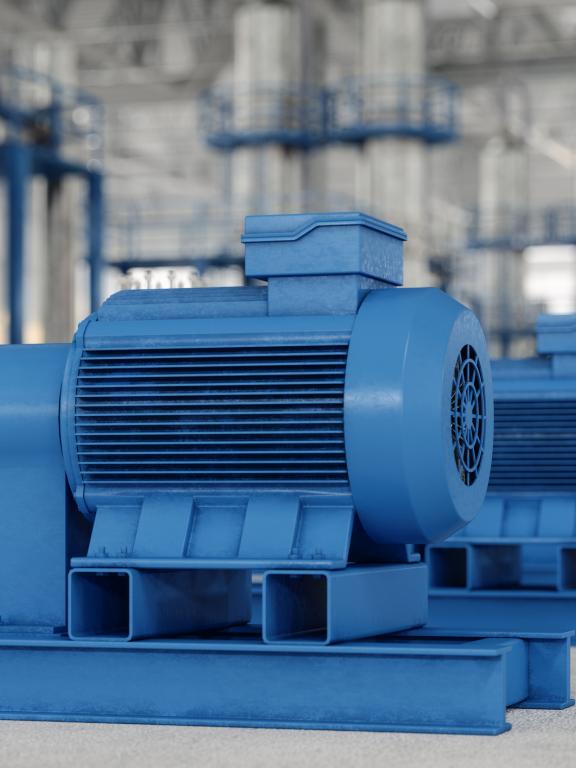
100% electric motorization with a power output of 8.5 MW
Fuel cells
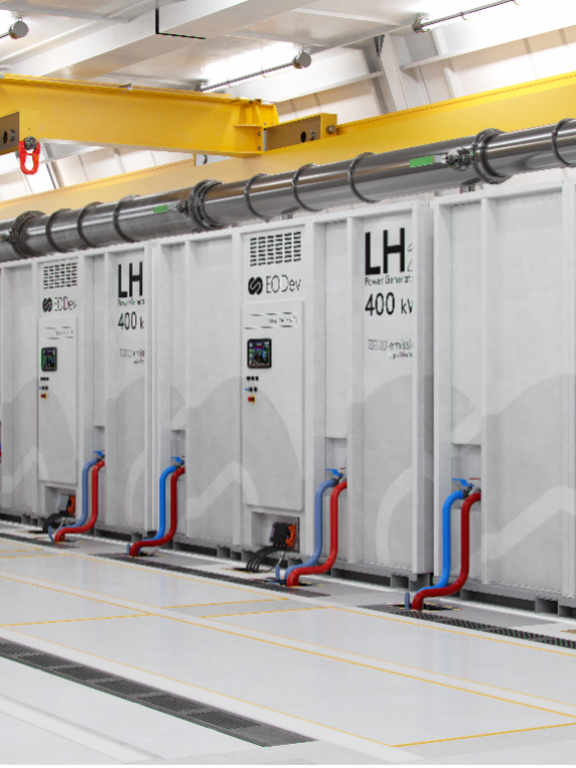
12 Parallel 400 kW Modules
Hybridization
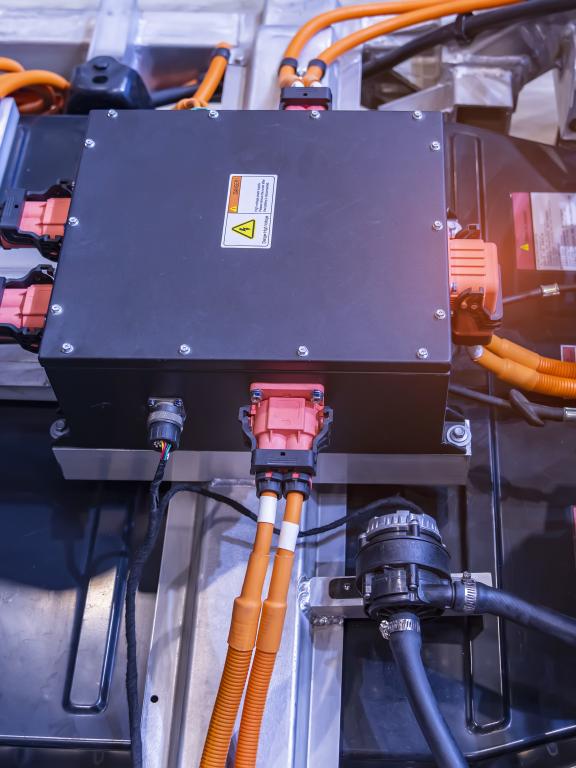
Batteries and auxiliary generator for safety purposes
Optimized Systems Management
Embedded software for technical and economic optimization
Liquid Hydrogen Storage
50 tons of cryogenic LH₂ onboard
A catalyst for the emergence of a maritime hydrogen industry
Technical specifications
Length
160 m
Beam
24.5 m
Capacity
1,100 TEU
H₂ range
1,600 nautical miles (14 days)
H₂ storage
50 t of liquid hydrogen
Speed
12.5 knots (cruising)
Displacement
12,000 tonnes
Air draft
36 m
Draft
8 m
Crew
18 people
Expected commissioning
2030
A concrete response to new European standards
Designed in anticipation of the FuelEU Maritime regulation and the climate targets set by the International Maritime Organization (70% greenhouse gas emissions by 2040 compared to 2008), EO2 exceeds current requirements while ensuring operational performance and cost-effectiveness. By demonstrating the technical and economic feasibility of a cargo ship with zero direct emissions, EO2 stands as a model for a new generation of cargo ships: in line with climate imperatives, industrially viable, and strongly focused on the future.
EO2 plays a structuring role in the development of the liquid hydrogen industry, from production and liquefaction to bunkering. It actively contributes to the emergence of the infrastructure and standards needed to scale up these technologies.
How is EO2 different?
Précédent
Suivant
Demonstrate the viability of liquid hydrogen in high-power maritime systems at industrial scale.
Operate on commercial routes to prove the performance of low-carbon solutions in real-world conditions
Anticipate regulatory constraints and meet tomorrow's climate targets today.
Create economically competitive model for shipowners, without compromising on operational performance.