
Starting from the field, capturing the essentials
Energy Observer has launched its 2025–2033 expedition with a foundational mission: exploring the approaches to capturing, storing, and reusing carbon. For two years, EO1 will sail across Europe and the North Atlantic to meet the most advanced projects, both natural and industrial, and examine their real potential to reduce CO₂ already present in the atmosphere.
The stakes could not be higher. To limit global warming and remain on track with the Paris Agreement, 1.5 °C and well below 2 °C, the IPCC climate pathways are unambiguous: global CO₂ emissions must be cut by about 45% by 2030 compared to 2010, and reach net zero around 2050. This requires a profound transformation of our production and consumption models, along with a true embrace of sobriety.
But even with rapid and massive reductions, the reports emphasize that part of the carbon already accumulated in the atmosphere will also need to be captured and stored. A complementary, yet indispensable, contribution to emissions reductions.
This mission seeks to shed light on the diversity of strategies, but also on their limits, giving a voice to experts, industrial players, critical perspectives, and local actors experimenting in the field.
Natural carbon sinks
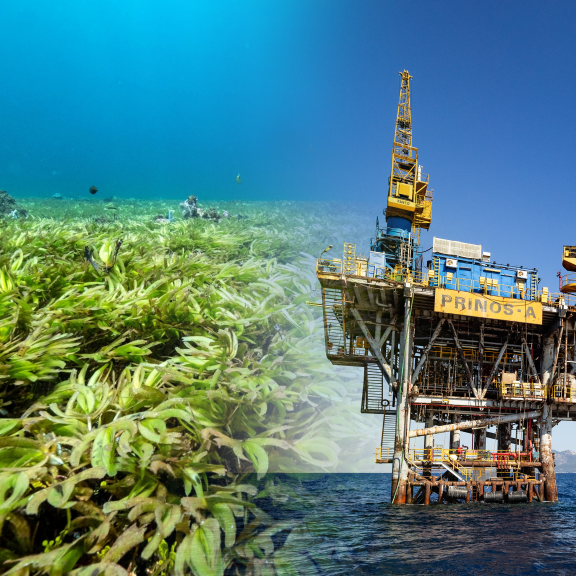
The Energy Observer team will highlight the crucial role of natural carbon sinks: oceans, forests, wetlands, seagrass meadows, and regenerative agricultural systems. These essential ecosystems are often overlooked, with considerable potential, yet fragile in the face of climatic and human pressures.
Industrial solutions
The journey will also stop at sites where industrial solutions are emerging: mineralization, geological storage, direct air capture, and CO₂ reuse in construction materials or synthetic fuels. Still experimental, these initiatives could play a major role if scaled up.
The spirit of the expedition
Beyond cataloguing solutions, this mission embodies the spirit of the expedition: going into the field, connecting disciplines, and sharing knowledge. Energy Observer aims to question, challenge models, and communicate findings with objectivity.
An on-board investigation into today's most pressing challenges, to be shared through images and videos all along this journey across Europe and the North Atlantic.