
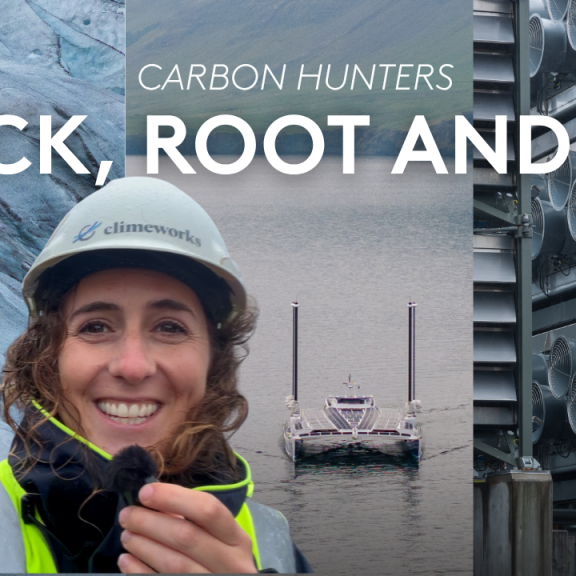
Why Iceland? Because part of our climate future may well be decided here. On this volcano-shaped island, two radically different approaches to tackling CO₂ exist side by side: sci-fi-worthy high-tech plants, and a spectacular natural landscape now being restored.
Inside Mammoth, the world's largest DAC plant
Our team first visited Climeworks, a pioneer of direct air capture (DAC). There, Mammoth, the largest facility of its kind in the world, literally sucks CO₂ out of the atmosphere using dozens of giant "vacuum cleaners." The technology has already won over Microsoft, Shopify and TikTok, but it remains expensive (around $1,000 per ton) and still far from the volumes originally promised.
Turning CO₂ into rock
A short walk away, Carbfix takes the captured CO₂ and injects it into Iceland's basalt bedrock. The result: the gas mineralizes and literally turns into stone, a natural process the company speeds up from hundreds of years down to just a few months. Since 2014, Carbfix has permanently stored more than 100,000 tons of CO₂ this way.
An expert's take, and the power of ecosystems
To get some perspective, the team called Sylvain Delerce, scientific director at an NGO specializing in carbon capture, who offers a nuanced view on the still-marginal role of these technologies today, and their potential by 2040-2050. But technology isn't the only path being explored. In Iceland, which is almost entirely without forests, restoring natural ecosystems emerges as an essential complement to technological solutions.
A conviction, not a conclusion
After a year-long investigation, one thing is clear: the solution won't come from forests alone, nor from machines alone, it will come from our ability to cut emissions, protect ecosystems, and keep developing the tools that let us go further.
🎬 Watch the full episode now on YouTube: Carbon Hunters: Rock, Root and CO2